
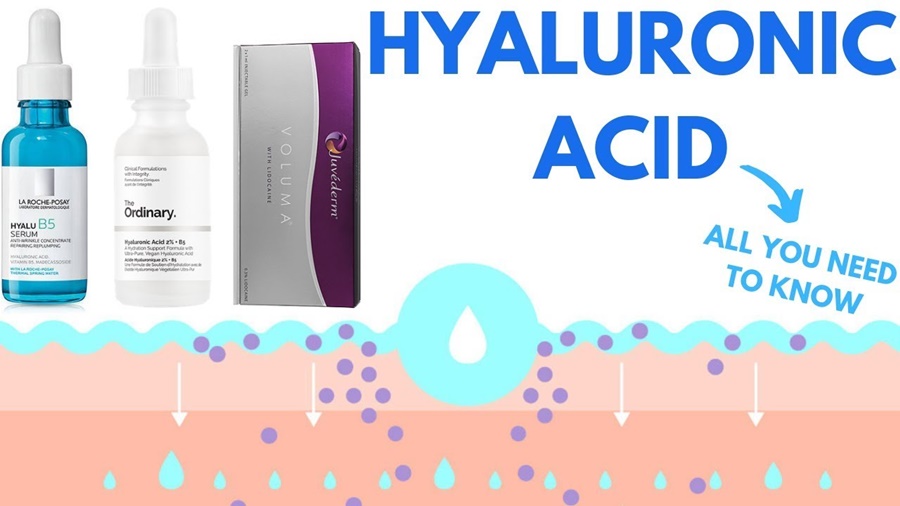
Skincare and wellness products are full of buzzwords, but two ingredients that consistently stand out are hyaluronic acid and collagen. Both are widely praised for promoting youthful skin, hydration, and overall skin health but they are very different in structure, function, and how they benefit the body.
In this article, we’ll explore both compounds, how they work, and how to choose between them depending on your needs.
1. What Is Hyaluronic Acid?
Hyaluronic acid (HA) is a naturally occurring molecule found throughout the body, especially in the skin, eyes, and connective tissues. It’s a type of glycosaminoglycan a long carbohydrate chain that holds water like a sponge.
Key Characteristics
- Can hold up to 1,000 times its weight in water
- Acts primarily as a hydrating molecule
- Found naturally in skin, joints, and bodily tissues
How It Works
Hyaluronic acid acts as a moisture magnet. When applied topically or taken (in some supplement forms), it attracts water to the skin’s surface improving hydration and plumpness.
2. What Is Collagen?
Collagen is the most abundant protein in the body and a major structural component of skin, hair, nails, bones, tendons, and ligaments. It forms fibers that provide strength, firmness, and structure.
Key Characteristics
- A structural protein
- Makes up ~70–80% of skin’s dry weight
- Provides elasticity and strength
How It Works
Collagen supplements usually in hydrolysed (broken down) form are absorbed by the body and may support the body’s natural collagen production.
3. Benefits of Hyaluronic Acid
Hydration Powerhouse
HA infuses skin with deep hydration and helps retain moisture.
Improves Skin Texture
Hydrated skin appears smoother, plumper, and more radiant.
Supports Healing
It plays a role in wound healing and inflammation reduction.
Joint Comfort
HA is a component of synovial fluid and supports joint lubrication.
4. Benefits of Collagen
Improves Skin Elasticity
Collagen supports skin structure and can reduce sagging.
Bone & Joint Health
Collagen helps maintain cartilage strength and reduces joint pain.
Stronger Hair & Nails
Collagen can improve growth and strength.
Supports Connective Tissue
Beneficial for overall tissue integrity and healing.
5. Difference in Mechanism
| Feature | Hyaluronic Acid | Collagen |
|---|---|---|
| Type | Sugar molecule (glycosaminoglycan) | Structural protein |
| Main Function | Hydration and moisture retention | Structural support and strength |
| Found in | Skin, joints, eyes | Skin, bones, tendons |
| Supplement Effect | Adds moisture to skin surfaces & supports joint fluid | Helps build body’s collagen fibers |
| Skin Effect | Immediate hydration | Long-term elasticity improvement |
6. Application Methods
Hyaluronic Acid
- Serums
- Moisturizers
- Injectable fillers (dermal fillers)
Collagen
- Oral supplements (powders, capsules)
- Bone broth
- Topical products (limited absorption)
Note: Topical hyaluronic acid is effective because it acts on the skin’s surface. Collagen applied topically has limited absorption due to its large protein structure.
7. Hyaluronic Acid vs Collagen: Which Is Better?
The answer depends on your goals:
For Hydration & Plump Skin
Hyaluronic Acid wins.
It directly hydrates and attracts moisture.
For Structural Support & Aging Prevention
Collagen is more effective.
It strengthens underlying tissue for long-term elasticity.
Best Combined
For many people, using both together yields the best results:
- HA brings hydration and immediate improvement
- Collagen builds resilience and long-term firmness
8. When to Use Each
Use Hyaluronic Acid if:
Your skin feels dry or dull
You want a plumped, hydrated appearance
You’re concerned about fine lines caused by dehydration
Use Collagen if:
You want firmer, more elastic skin
You’re focused on aging prevention long-term
You want benefits to joints, hair, nails, and tissues
9. Safety and Side Effects
Hyaluronic Acid
- Generally safe
- Rare irritation or redness
- Safe for most skin types
Collagen Supplements
- Safe for most people
- Some may experience mild digestive discomfort
- Always check for allergies (e.g., fish, bovine sources)
10. Summary Comparison
Hyaluronic Acid
- Best for immediate hydration
- Works well topically and with fillers
- Improves moisture and texture
Collagen
- Best for long-term structural health
- Works internally (supplements)
- Supports skin, joints, and connective tissue
Conclusion
Hyaluronic acid and collagen are both essential for healthy, youthful-looking skin, but they work in very different ways. Hyaluronic acid excels at hydration, drawing moisture into the skin and giving it a plump, smooth, and refreshed appearance. Its effects are often visible quickly, making it ideal for addressing dryness and fine lines caused by dehydration.
Collagen, on the other hand, provides structure and strength. It supports skin firmness, elasticity, and overall tissue health, with benefits that develop gradually over time. While it doesn’t offer instant surface results like hyaluronic acid, it plays a critical role in long-term skin resilience and aging prevention.
Leave a Reply