
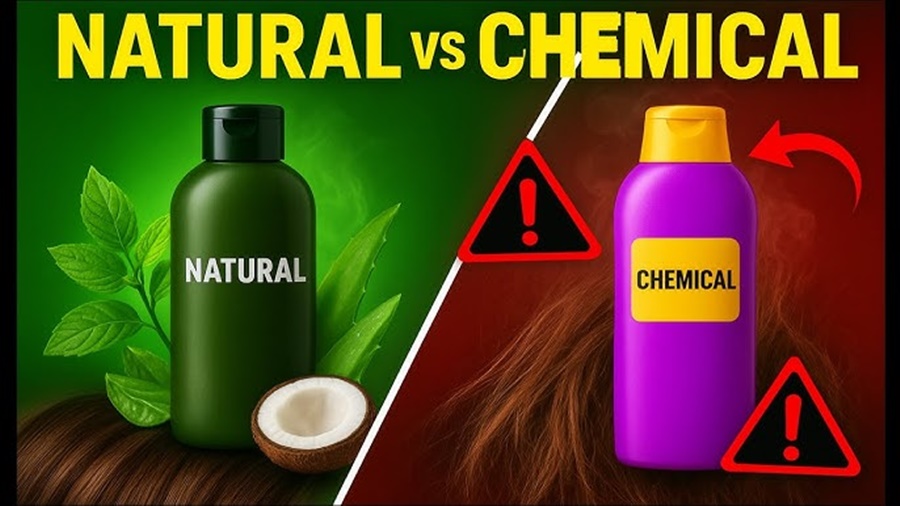
Hair care is an essential part of personal grooming, and choosing the right shampoo plays a major role in maintaining healthy hair and scalp. In today’s market, shampoos are generally divided into two main categories: herbal shampoos and chemical shampoos.
Both types serve the basic purpose of cleaning the hair and scalp, but they differ significantly in their ingredients, effects, benefits, and long-term impact on hair health.
This article provides a detailed comparison between herbal shampoo and chemical shampoo, helping you understand which option may be more suitable for your hair care routine.

What is Herbal Shampoo?
Herbal shampoo is a hair cleansing product made primarily from natural plant-based ingredients. These shampoos use extracts from herbs, fruits, seeds, and oils that have been traditionally used for hair care for centuries.
Common herbal ingredients include:
- Aloe vera
- Amla (Indian gooseberry)
- Shikakai
- Neem
- Hibiscus
- Coconut oil
- Reetha (soapnut)
Herbal shampoos are generally formulated with minimal synthetic chemicals and are designed to clean hair gently while nourishing the scalp.
Benefits of Herbal Shampoo
- Gentle on the scalp
Herbal shampoos are usually mild and less likely to cause irritation or allergic reactions. - Natural nourishment
Plant extracts contain vitamins, antioxidants, and minerals that help strengthen hair. - Reduced chemical exposure
They typically avoid harsh substances like sulfates and parabens. - Suitable for sensitive skin
People with sensitive scalps often prefer herbal shampoos because they are less aggressive. - Long-term hair health
With consistent use, herbal shampoos may improve hair texture and reduce hair fall.
Disadvantages of Herbal Shampoo
- May produce less foam, which some users associate with weaker cleaning.
- Results can be slower compared to chemical treatments.
- Shelf life may be shorter due to fewer preservatives.
- Sometimes more expensive depending on the brand.
What is Chemical Shampoo?
Chemical shampoo refers to shampoos that are made primarily with synthetic ingredients developed in laboratories. These shampoos contain cleansing agents and additives designed to quickly remove dirt, oil, and product buildup.
Common chemical ingredients include:
- Sodium Lauryl Sulfate (SLS)
- Sodium Laureth Sulfate (SLES)
- Parabens
- Silicones
- Artificial fragrances
- Synthetic preservatives
These ingredients are widely used in commercial shampoos because they are effective, affordable, and provide fast results.
Benefits of Chemical Shampoo
- Deep cleaning
Chemical shampoos are very effective at removing oil, sweat, and dirt. - Rich lather
Sulfates produce foam that helps distribute the shampoo evenly. - Quick visible results
Hair may appear smoother and shinier immediately due to conditioning agents. - Long shelf life
Synthetic preservatives help prevent bacterial growth. - Wide variety
Available for different hair problems like dandruff, frizz, damage repair, and color protection.
Disadvantages of Chemical Shampoo
- Can cause dryness or scalp irritation in some people.
- Harsh chemicals may strip natural oils from hair.
- Long-term use may lead to hair weakening or dryness.
- Some ingredients may cause allergic reactions in sensitive individuals.
Key Differences Between Herbal and Chemical Shampoo
| Feature | Herbal Shampoo | Chemical Shampoo |
|---|---|---|
| Ingredients | Natural plant extracts | Synthetic chemicals |
| Effect on Scalp | Gentle and soothing | Can be harsh for sensitive skin |
| Cleaning Strength | Mild to moderate | Strong cleansing |
| Foam Production | Usually low | High foam |
| Long-term Impact | Supports natural hair health | May cause dryness if overused |
| Shelf Life | Shorter | Longer |
| Environmental Impact | Generally eco-friendly | May contain non-biodegradable chemicals |
Which One Should You Choose?
The choice between herbal and chemical shampoo largely depends on your hair type, scalp condition, and personal preference.
- If you prefer natural products and gentle care, herbal shampoo may be the better option.
- If you need strong cleansing or quick results, chemical shampoo may be more effective.
- People with sensitive scalps often benefit from herbal formulations.
- Those who use styling products frequently may prefer chemical shampoos for deeper cleaning.
Some individuals also use a combination approach, such as using a mild herbal shampoo regularly and a stronger chemical shampoo occasionally to remove buildup.
Cost Comparison
When considering a switch, the price of herbal versus chemical shampoo plays a significant role. Herbal shampoos often range from $10 to $30 for a standard bottle, depending on the ingredients. In contrast, many chemical shampoos are more budget-friendly, typically priced between $5 and $15.
Though herbal options may feel pricier upfront, their natural ingredients can lead to healthier hair over time, potentially reducing the need for additional hair products. You might save money in the long run due to less frequent purchases.
Who Suits Each Option?
Your hair type and scalp condition can influence which shampoo you should choose. If you have sensitive skin or allergies, herbal shampoos are less likely to irritate you due to their natural formulations. You might also prefer them if you seek a more eco-friendly choice.
On the other hand, if you suffer from specific hair issues—like oiliness or dandruff—chemical shampoos could be beneficial. These formulas often contain targeted agents that deal effectively with such problems, offering quicker results.
Consider your lifestyle too. If you frequently use heat styling tools, chemical shampoos can help combat damage. Yet, for those who prefer a gentle, nurturing approach to hair care, herbal options can provide nourishing benefits and promote long-term health.

Common Mistakes to Avoid
Switching between herbal and chemical shampoos might lead you to make some common errors. One frequent mistake is not giving herbal shampoos enough time to work. Allow at least 4-6 weeks for your hair to adjust to a new product.
Another pitfall is overusing either type. Excessive washing, regardless of your choice, can strip natural oils. Stick to a routine of two to three washes weekly to maintain balance and health.
- Always read ingredient labels before purchasing.
- Don’t mix different brands without knowing how they react together.
- Be patient when transitioning to herbal products.
Worth reading alongside this: clarifying shampoo vs regular shampoo.
Conclusion
Both herbal and chemical shampoos have their own advantages and limitations. Herbal shampoos focus on natural nourishment and gentle cleansing, making them suitable for long-term hair care and sensitive scalps. Chemical shampoos, on the other hand, provide powerful cleaning and quick cosmetic results but may contain ingredients that can be harsh if used excessively.
Ultimately, the best shampoo is the one that maintains your hair’s health, suits your scalp, and fits your lifestyle. Understanding the differences between herbal and chemical shampoos allows consumers to make informed decisions and develop a hair care routine that promotes strong, healthy, and beautiful hair.
Leave a Reply