
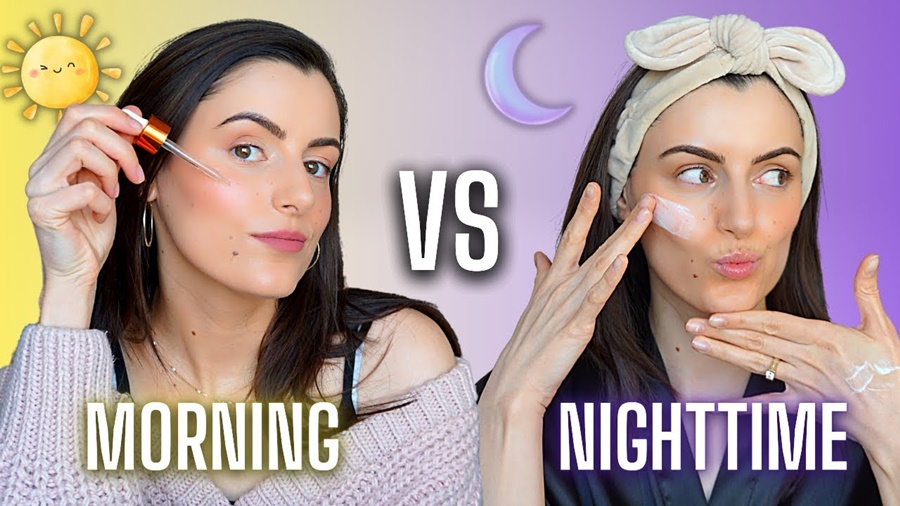
A well-structured morning and night skincare routine ensures your skin is protected, nourished, and allowed to heal effectively. Your skin has different needs throughout the day. But should your skincare look the same in the morning and at night? Absolutely not.
In this article, we break down the key differences between a morning and night skincare routine, why each is important, and what products to include in both.

Why You Need a Morning Skincare Routine
The main purpose of a morning skincare routine is protection. During the day, your skin is exposed to sunlight, pollution, bacteria, and other environmental stressors. Morning skincare prepares your skin to face these aggressors.
Key Goals:
- Protect the skin barrier
- Hydrate the skin
- Control oil production (if needed)
- Prevent sun damage
- Create a good base for makeup (if worn)
Typical Morning Routine Steps:
- Cleanser
Use a gentle cleanser to remove oil and sweat that builds up overnight. - Toner (Optional)
Balances your skin’s pH and preps it for better product absorption. - Antioxidant Serum (like Vitamin C)
Protects against free radicals and pollution. Vitamin C also brightens the skin. - Moisturizer
Keeps the skin hydrated and supports the skin barrier. - Sunscreen (SPF 30 or higher)
This is the most crucial step. Protects against harmful UV rays that cause aging and skin cancer. - Makeup (Optional)
Apply after your skincare has settled.
Why You Need a Night Skincare Routine
At night, your skin is in repair mode. Cell turnover increases, and the skin is more receptive to active ingredients. A night routine helps replenish, repair, and treat specific skin concerns like acne, aging, or dehydration.
Key Goals:
- Deeply cleanse away the day
- Rehydrate and nourish
- Treat specific skin concerns (acne, wrinkles, pigmentation)
- Support skin regeneration
Typical Night Routine Steps:
- Makeup Remover / Oil Cleanser
First cleanse to remove makeup, SPF, and excess oil. - Water-Based Cleanser
Second cleanse to remove any remaining dirt and impurities. - Exfoliator (2–3 times a week)
Chemical exfoliants (AHA/BHA) remove dead skin cells and unclog pores. - Toner or Essence
Rebalances skin and enhances absorption of serums. - Treatment Serums (Retinol, Niacinamide, etc.)
These target specific issues like acne, pigmentation, or fine lines. - Eye Cream
Helps reduce puffiness, dark circles, or fine lines around the eyes. - Moisturizer or Night Cream
Locks in moisture and supports the skin’s overnight repair. - Facial Oil or Sleeping Mask (Optional)
For extra hydration and nourishment, especially in dry climates.
Key Differences Between Morning and Night Routines
| Aspect | Morning Routine | Night Routine |
|---|---|---|
| Purpose | Protection from sun and pollution | Repair and renewal |
| Active Ingredients | Antioxidants (Vitamin C) | Retinol, exfoliants, peptides |
| Sun Protection | Essential (SPF 30 or higher) | Not needed |
| Cleansing | Light cleanse | Double cleansing for makeup and buildup |
| Product Type | Lightweight, fast-absorbing | Richer, more nourishing |
Tips for an Effective Skincare Routine
- Consistency is key. Stick to your routine daily for best results.
- Patch test new products to avoid irritation or allergic reactions.
- Adjust based on skin needs — your routine may change with seasons, age, or skin concerns.
- Don’t overload your skin. More products don’t mean better results.
- Stay hydrated and maintain a healthy diet — skincare works best when supported from within.
Common Mistakes in Skincare Routines
Many people make avoidable errors in their morning or night skincare routines. One common mistake is skipping sunscreen entirely during the day. Even cloudy days allow harmful UV rays to penetrate your skin.
Another frequent error is applying serums or creams without waiting for the previous step to absorb. This can lead to pilling and ineffective product performance. Make sure each layer has time to settle before adding another.
Using overly harsh products, especially at night, can irritate your skin. You may feel tempted to try multiple active ingredients simultaneously. However, this can overwhelm your skin, leading to redness and breakouts.
- Skipping sunscreen in the morning.
- Not letting products absorb properly.
- Overusing strong active ingredients.

Who Each Routine Suits
Your lifestyle can greatly influence which skincare routine suits you best. If you’re often exposed to pollution or UV rays, a morning routine becomes crucial for protection. Those with sensitive skin might prefer a simpler morning regimen to minimize irritation.
On the other hand, individuals with busy schedules often find nighttime routines more manageable. After a long day, dedicating time to skincare allows your skin to repair and rejuvenate overnight. This suits anyone seeking recovery from daily stressors.
The ideal routine depends on your goals and daily habits. Think about your skin type and needs as you decide which option works best for you.
Maintenance and Cost Considerations
Evaluating the sustainability of your skincare routine is key. Morning routines often require light products that might be budget-friendly. Conversely, night routines can involve premium serums and treatments that accumulate costs over time.
Plan your budget strategically. For example:
- Daily cleanser: $10-30
- Moisturizer: $15-50
- Sunscreen: $10-40
- Night treatments: $20-100
Selecting multi-purpose products can help you save money and time. Look for a day cream with SPF that hydrates, while your night cream can target repair and anti-aging. Regular evaluations of your routine can ensure you don’t overspend on unnecessary products.
Conclusion
Both morning and night skincare routines are essential, but they serve very different purposes. Think of your morning routine as your skin’s armor, and your night routine as its recovery kit.
Investing time into both routines, even just a few minutes, can lead to healthier, clearer, and more youthful-looking skin in the long run.
Leave a Reply